
Complete Guide to Getting a Drone Permit in Morocco
Terms like drone permit Morocco, drone authorization Morocco, drone filming Morocco, and Morocco drone regulations come up the moment aerial cinematography

Terms like drone permit Morocco, drone authorization Morocco, drone filming Morocco, and Morocco drone regulations come up the moment aerial cinematography
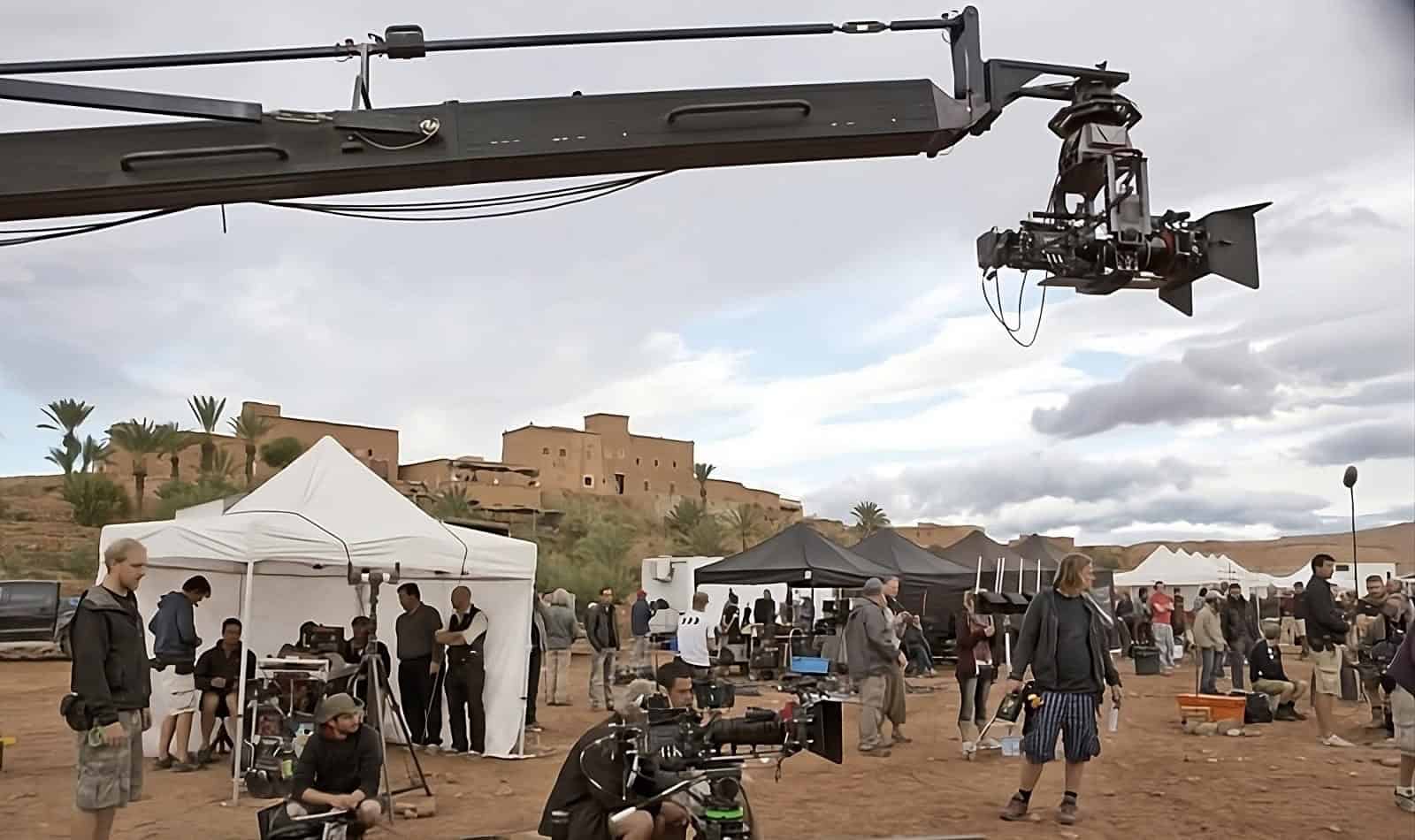
Morocco has become an increasingly popular destination for international filmmakers due to its diverse landscapes, skilled local crews, and supportive government

Morocco’s enchanting appeal as a filming location remains unrivalled, with its remarkable cultural diversity, captivating landscapes,

Morocco Film Incentives: Cash Rebate & VAT Exemption
Morocco offers a 30% cash rebate on eligible local expenditure for qualifying foreign film and audiovisual productions, alongside a separate VAT exemption mechanism for certain goods and services acquired or rented during filming. They are two different arrangements with different conditions, paperwork and effects on a production budget.
If you are budgeting a feature film, television series, TV film or documentary in Morocco, the starting questions are straightforward: Does the project qualify? How much qualifying spend can be documented? When should the application start? This guide sets out the conditions published by the Centre Cinématographique Marocain (CCM) and the main points to check with your Moroccan production partner before committing a schedule or financial plan.
Morocco’s 30% Cash Rebate: Key Figures
These are headline criteria, not an eligibility decision. Project format, documentation, payments, expenditure categories, funding availability and the commission’s review remain material.
Which Foreign Productions May Qualify?
The CCM lists foreign feature films, television fiction series, TV films, documentaries, docufiction and certain long-form fiction intended for internet exploitation within the scheme. A qualifying category still needs to meet the investment, activity and other conditions.
A filming permit and the cash rebate are not the same approval. A commercial, music video, short-form digital project or other production may be able to film legally in Morocco without belonging to one of the rebate categories listed by the CCM. Do not build the rebate into a production budget based only on the fact that filming is permitted.
If your project includes several formats, a coproduction structure or unusual distribution rights, ask for an eligibility review before presenting a net-of-rebate budget to your financiers. The CCM also publishes specific treatment for Moroccan-foreign coproductions, assessed against the qualifying foreign coproducer’s expenditure and investment in Morocco.
What Counts as Eligible Expenditure?
The 30% applies to approved eligible local expenditure, not automatically to the entire Moroccan budget or to the production’s global budget. The CCM refers applicants to the expense nomenclature and annexes of the applicable specifications for the detailed categories.
Two rules are especially important in production accounting:
The working budget should therefore distinguish estimated local spending, potentially eligible spending and finally accepted spending. These figures may not be identical. For example, if MAD 8 million in expenditure were ultimately accepted as eligible, 30% would represent MAD 2.4 million in indicative support, subject to all scheme conditions and the applicable expense limits. This is a calculation example, not a rebate quotation or approval. Supplier documentation, payment evidence, contracts and the correct categorisation of costs need attention from preparation onwards.
For international producers, this is where local budgeting becomes an operational responsibility rather than a theoretical incentive calculation. From the initial estimate onwards, the local production team needs a clear way to record and reconcile costs against the project’s financing and reporting requirements.
How to Apply for the Morocco Film Cash Rebate
1. Check the project and preliminary Moroccan budget
Confirm the project’s format and distribution, proposed Moroccan expenditure excluding tax, expected days of work and prospective qualifying costs. Identify any uncertainty before budgeting the support as anticipated financing.
2. Prepare the application before filming
The CCM requests information on the nature and distribution of the work, planned activity in Morocco, investment programme, estimated total and eligible local expenditure and the amount of support sought. Confirm the current forms, required evidence and submission route with the CCM before lodging an application.
3. Obtain preliminary approval and arrange the guarantee
The CCM describes a preliminary decision process subject to availability of funds and a bank guarantee equal to 5% of the support requested. Its published procedure gives timeframes for the decision and deposit; these should be checked against the applicable approval and correspondence for the specific project. A preliminary approval is not final confirmation of the reimbursement amount.
4. Keep the shoot and expenditure records aligned
Build the schedule around the authorised scope of work, preserve expenditure evidence and maintain properly traceable payment flows. The CCM’s published framework sets a period after the guarantee is deposited for starting work, a completion period measured from the first day of shooting and a deadline for submitting the expenditure file following completion.
5. Submit the final expenditure file
Reconcile the local accounts, contracts and proof of payment against the applicable eligible-cost categories. The amount requested is then subject to review and validation, rather than being payable simply because a preliminary spending target was reached.
6. Follow the commission’s decision and payment
For the scheme applying after 28 March 2022, the CCM describes payment in one instalment within a maximum of 180 days after the commission decision relating to a complete payment application. This should not be described as 180 days after wrap or as a guaranteed arrival date independent of the administrative process.
Planning the Timeline and Cash Flow
According to the CCM’s published process, the guarantee is followed by up to six months to start filming, 12 months from the first filming day to complete production, and three months after filming ends to file supporting expenditure documents. Confirm how those time limits apply to the approval received for your project, including any subsequently amended conditions.
A rebate is generally recovered after eligible production costs have been incurred, documented and reviewed. Therefore, the production needs a viable cash-flow plan without assuming that the rebate money will be available during prep or principal photography. Avoid treating a possible rebate as unrestricted working capital.
Other Commitments Under the CCM Incentive
The incentive also carries obligations beyond the budget. The CCM lists commitments concerning the acknowledgement of Moroccan production support in the credits, the deposit of a copy of the work, the use of excerpts for promotion of Morocco, and certain cultural exhibition rights in Morocco. Published exceptions apply to specified internet-first works. The CCM also requires the production to settle amounts owed to participating crews and Moroccan suppliers.
These points should be reviewed against the project’s distribution, delivery and contractual arrangements before accepting incentive terms. Their precise scope matters particularly for streamers, international rights holders and coproductions.
VAT Exemption for Foreign Film Productions in Morocco
VAT exemption is distinct from the cash rebate. Article 92-I-38° of Morocco’s 2026 General Tax Code provides an exemption for goods and services bought or rented by foreign audiovisual, film and television production companies in connection with filming in Morocco. The text specifies, among its conditions:
The implementing VAT regulations describe an application to the relevant local tax service supported by a filming authorisation and confirmation of the convertible-currency account. In practice, the tax treatment and documentary process should be checked with the local accountant or tax adviser before invoices are issued or paid.
It is not accurate to say that every expense on every foreign shoot is automatically exempt, nor to assume that a 20% VAT rate can simply be added to a 30% cash rebate to advertise a 50% incentive. The applicable expense bases, tax conditions, approval routes and timing differ.
Can the Cash Rebate and VAT Exemption Be Used Together?
They may be relevant to the same production, but are separate mechanisms. The VAT treatment concerns qualifying supplies and payments during production; the rebate concerns expenditure later assessed under the CCM scheme. Some invoices and budget lines will need different treatment under each set of rules.
Before finalising your Moroccan budget, distinguish: gross supplier cost, VAT treatment, expected eligibility for the cash rebate, timing of payments and the amount that may eventually be reimbursed. The final assessment belongs to the relevant authorities. Neither the exemption nor the rebate should be presented as automatically approved or fully interchangeable.
Why Your Moroccan Production Partner Matters
Film incentives depend on actual production documentation. A workable plan needs more than a percentage in a budget deck: it requires an eligible project structure, filming authorisation, schedules, vendor contracts, expenditure controls, payment records and a complete closing file.
CAESTUS FILMS provides Moroccan executive and line production services for international shoots, including local planning, production budgeting, supplier coordination and agreed financial reporting. Where the project is pursuing incentives, we can discuss the administrative and production documentation required within our assigned scope, with the CCM and qualified advisers responsible for their respective decisions and tax advice.
Filming authorisation is a separate workflow. Read our guide to Moroccan filming permits for foreign productions for the project categories and application documentation, or see our filming permit services in Morocco if you need local support with that process.
What to Send Us for a Preliminary Incentive Discussion
If you are comparing countries, exploring a Moroccan unit or preparing the local cost plan for a greenlit production, a short brief helps us assess the production work required:
You do not need a complete final spend file to begin a conversation. We can discuss the local production assumptions; eligibility, VAT authorisation and rebate decisions must still be confirmed through the competent bodies.
Morocco Film Incentives — Frequently Asked Questions
How much is Morocco’s film cash rebate?
The CCM describes a 30% cash rebate on approved eligible local expenditure for qualifying foreign productions. It is not a 30% rebate on every item of a production budget.
What is the minimum spend for Morocco’s 30% rebate?
The CCM lists a minimum planned expenditure of MAD 10 million excluding tax in Morocco, together with the other eligibility requirements. Reaching the spending threshold alone does not ensure approval.
Do the 18 days have to be principal photography?
No. The CCM states a minimum of 18 days of work in Morocco, including days spent building sets. The exact production plan must satisfy the conditions applied to the project.
Are commercials and music videos eligible for the 30% rebate?
The standard qualifying list published by the CCM covers specified films and audiovisual formats; it does not list commercials or music videos as standalone qualifying categories. A filming permit is different from rebate eligibility. Confirm any unusual or mixed-format project directly with the CCM.
Does the 30% rebate have a maximum cap?
The CCM says there is no fixed cap on the support for eligible expenditure after 28 March 2022, while eligible expense categories and the separate 90% expenditure limit still apply.
When is Morocco’s cash rebate paid?
The CCM describes payment in one instalment after administrative review, within a maximum of 180 days following the commission decision on a complete payment request under the post-March-2022 arrangements. This is not a promise of payment within 180 days of the last filming day.
Can foreign productions obtain VAT exemption in Morocco?
Certain purchases or rentals by qualifying foreign film and television production companies can benefit from VAT exemption under Article 92-I-38° of the 2026 General Tax Code. The conditions include expenditures of at least MAD 5,000, payment through the specified foreign-company convertible-currency bank account and the applicable authorisation process.
Can a Moroccan-foreign coproduction apply?
The CCM permits qualifying Moroccan-foreign coproductions to apply under rules focusing on the foreign coproducer’s relevant spending and investment in Morocco. The project’s structure and supporting evidence need specific review.
Plan Your Film Production Budget in Morocco
Considering a feature film, television series or documentary in Morocco? Send CAESTUS FILMS your preliminary schedule, location requirements and local budget assumptions so we can discuss the executive or line production services your shoot would need. We can help structure a realistic local production proposal; final financial incentive and VAT determinations remain with the competent authorities.
Discuss your production with CAESTUS FILMS
Official references: CCM foreign production support and cash rebate conditions; Moroccan General Tax Code 2026, Article 92-I-38°; VAT implementing regulations.
Regulatory references reviewed: 28 October 2026. This guide is general production information, not a binding eligibility determination or tax advice. Confirm requirements with the CCM and the competent tax authorities for your project.
tags :
SHARE:
Popular Posts
Categories